

As the world moves toward clean and renewable energy, solar power systems have become one of the most efficient and environmentally friendly ways to generate electricity. Rising electricity prices, increasing energy demand, and concerns about climate change have accelerated the adoption of solar energy in homes, industries, commercial buildings, and agriculture.
A solar power system converts sunlight into electricity using photovoltaic (PV) technology. It is renewable, sustainable, and capable of reducing electricity bills while minimizing carbon emissions.
In this comprehensive guide, you’ll learn everything about solar power systems—from their working principles and components to installation, benefits, costs, and future trends.
Table of Contents
What is a Solar Power System?
A Solar Power System is a renewable energy system that captures sunlight and converts it into electrical energy using solar panels. The generated electricity can be used immediately, stored in batteries, or supplied to the electricity grid.
Solar systems are suitable for:
- Residential homes
- Commercial buildings
- Industries
- Schools and colleges
- Hospitals
- Agricultural farms
- Government offices
- Remote villages
How Does a Solar Power System Work?
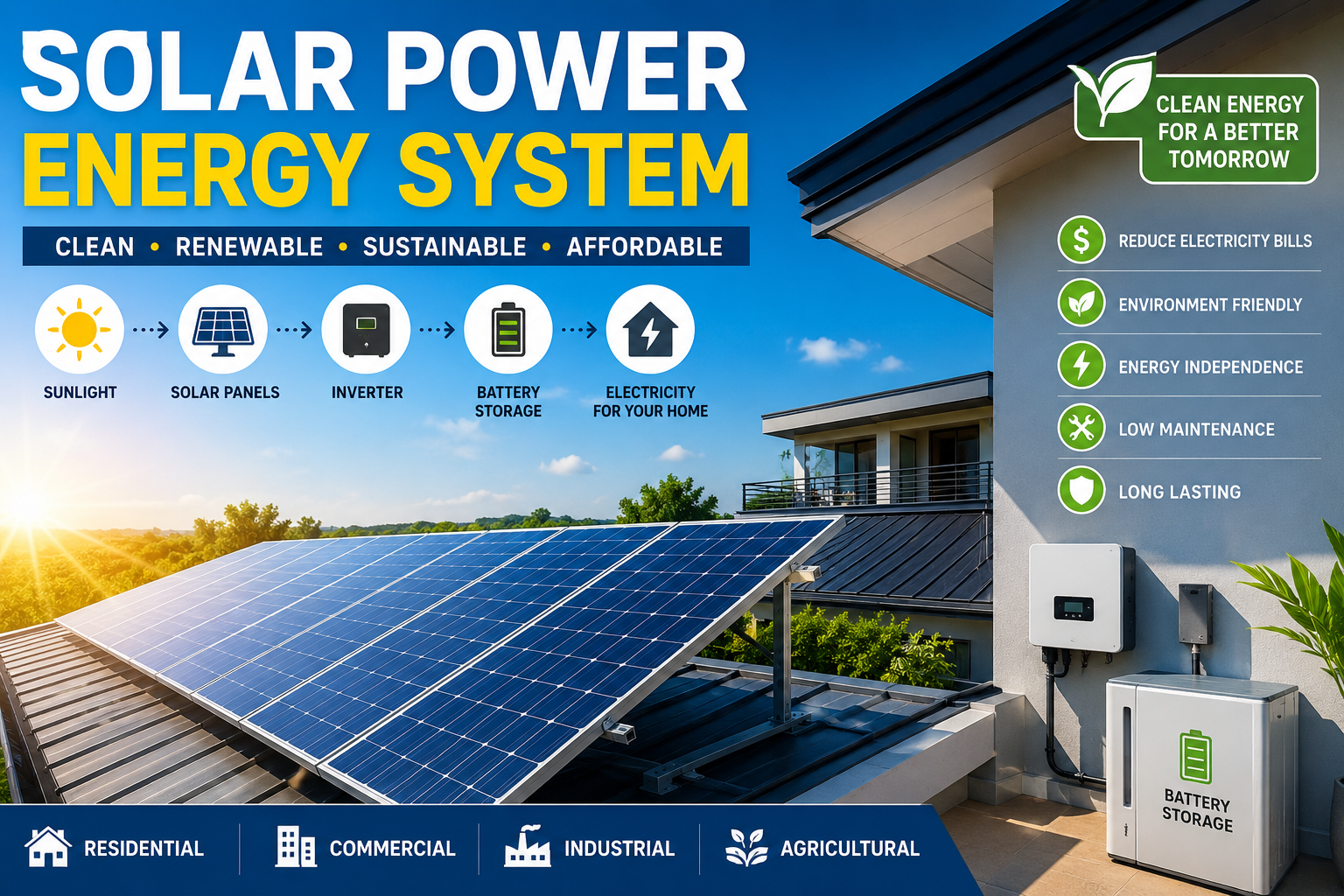
The operation of a solar power system involves several steps:
Step 1: Sunlight Hits Solar Panels
Solar panels contain photovoltaic (PV) cells that absorb sunlight.
Step 2: Electricity Generation
The PV cells convert sunlight into Direct Current (DC) electricity through the photovoltaic effect.
Step 3: Inverter Conversion
Since household appliances operate on Alternating Current (AC), the inverter converts DC into AC.
Step 4: Electricity Usage
The AC electricity powers lights, fans, appliances, air conditioners, and electronic devices.
Step 5: Excess Power
Depending on the system type:
- Stored in batteries
- Exported to the power grid
- Used later during power outages
Major Components of a Solar Power System
1. Solar Panels
Solar panels capture sunlight and generate electricity.
Types include:
- Monocrystalline Solar Panels
- Polycrystalline Solar Panels
- Thin Film Solar Panels
- Bifacial Solar Panels
2. Solar Inverter
The inverter converts DC electricity into usable AC electricity.
Common inverter types:
- String Inverter
- Micro Inverter
- Hybrid Inverter
- Central Inverter
3. Solar Battery
Solar batteries store excess electricity for use at night or during power failures.
Popular battery technologies:
- Lithium-Ion
- Lead Acid
- Lithium Iron Phosphate (LiFePO₄)
4. Mounting Structure
Supports solar panels on rooftops or the ground while ensuring proper tilt and orientation.
5. Charge Controller
Used mainly in off-grid systems to regulate battery charging and prevent overcharging.
6. Net Meter
Measures electricity imported from and exported to the utility grid.
Types of Solar Power Systems
1. On-Grid Solar System
Connected directly to the electricity grid.
Advantages
- Lower installation cost
- Net metering benefits
- No battery required
- Reduced electricity bills
Disadvantages
- Does not operate during grid outages unless paired with backup solutions.
2. Off-Grid Solar System
Operates independently without the utility grid.
Features
- Uses batteries
- Suitable for remote locations
- Provides complete energy independence
3. Hybrid Solar System
Combines grid connection with battery storage.
Benefits
- Backup during power cuts
- Lower electricity bills
- Better energy management
Types of Solar Panels
| Panel Type | Efficiency | Cost | Lifespan |
|---|---|---|---|
| Monocrystalline | High | High | 25–30 Years |
| Polycrystalline | Medium | Moderate | 20–25 Years |
| Thin Film | Lower | Lower | 15–20 Years |
| Bifacial | Very High | High | 30+ Years |
Advantages of Solar Power Systems
Clean Energy
Produces electricity without harmful emissions.
Renewable Resource
Sunlight is abundant and naturally replenished.
Lower Electricity Bills
Generates free electricity after installation.
Low Maintenance
Requires periodic cleaning and routine inspections.
Long Lifespan
Quality solar panels typically last over 25 years.
Energy Independence
Reduces reliance on fossil fuels and utility providers.
Environmentally Friendly
Helps reduce greenhouse gas emissions.
Government Incentives
Many countries offer subsidies, tax benefits, or net metering programs.
Disadvantages of Solar Power Systems
- High initial installation cost
- Weather-dependent performance
- Lower output during cloudy or rainy days
- Requires sufficient installation space
- Battery storage increases overall cost
Applications of Solar Power Systems
Solar power is widely used in:
- Residential homes
- Office buildings
- Shopping malls
- Factories
- Street lighting
- Water pumps
- Electric vehicle charging stations
- Telecom towers
- Railways
- Airports
- Hospitals
- Schools
- Smart cities
- Agricultural irrigation
Solar Power System Installation Process
- Site survey
- Energy requirement analysis
- System design
- Panel mounting
- Inverter installation
- Electrical wiring
- Battery installation (if required)
- Grid connection
- Testing and commissioning
Maintenance Tips
- Clean panels every 2–4 weeks (or as needed).
- Inspect cables and connectors periodically.
- Monitor inverter performance.
- Check battery health (if installed).
- Remove shading from nearby trees or structures.
- Schedule annual professional inspections.
Future of Solar Energy
The future of solar energy is promising, with innovations such as:
- Perovskite solar cells
- Transparent solar panels
- Flexible solar panels
- AI-powered energy management
- Smart solar grids
- Building-Integrated Photovoltaics (BIPV)
- Floating solar farms
- Solar-powered EV charging stations
- High-capacity battery storage
- Vehicle-to-Grid (V2G) integration
These advancements are expected to improve efficiency, reduce costs, and expand solar adoption worldwide.
Frequently Asked Questions (FAQs)
What is a solar power system?
A solar power system converts sunlight into electricity using photovoltaic (PV) panels, enabling homes and businesses to generate clean, renewable energy.
How long do solar panels last?
Most high-quality solar panels have a lifespan of 25–30 years, with gradual efficiency reduction over time.
Do solar panels work on cloudy days?
Yes, solar panels still generate electricity under cloudy conditions, although output is lower than on sunny days.
Which solar system is best for homes?
For most urban homes with a reliable electricity supply, an on-grid system is the most cost-effective. If backup during outages is important, a hybrid system is often the better choice.
Is solar power environmentally friendly?
Yes. Solar energy is renewable, produces no direct greenhouse gas emissions during operation, and helps reduce dependence on fossil fuels.
Conclusion
A solar power system is one of the smartest investments for a sustainable future. It offers clean, renewable electricity, reduces energy costs, and lowers environmental impact. Whether for homes, businesses, farms, or industries, solar technology provides a reliable path toward energy independence. As advancements in solar panels, battery storage, and smart energy management continue, solar power will play an even greater role in meeting global energy needs.