
Meta Description:
Discover what Biotechnology and Synthetic Biology are, how they work, their differences, applications, benefits, challenges, and how these revolutionary technologies are transforming healthcare, agriculture, energy, and industry.
🧬 Biotechnology & Synthetic Biology: The Future of Life Sciences
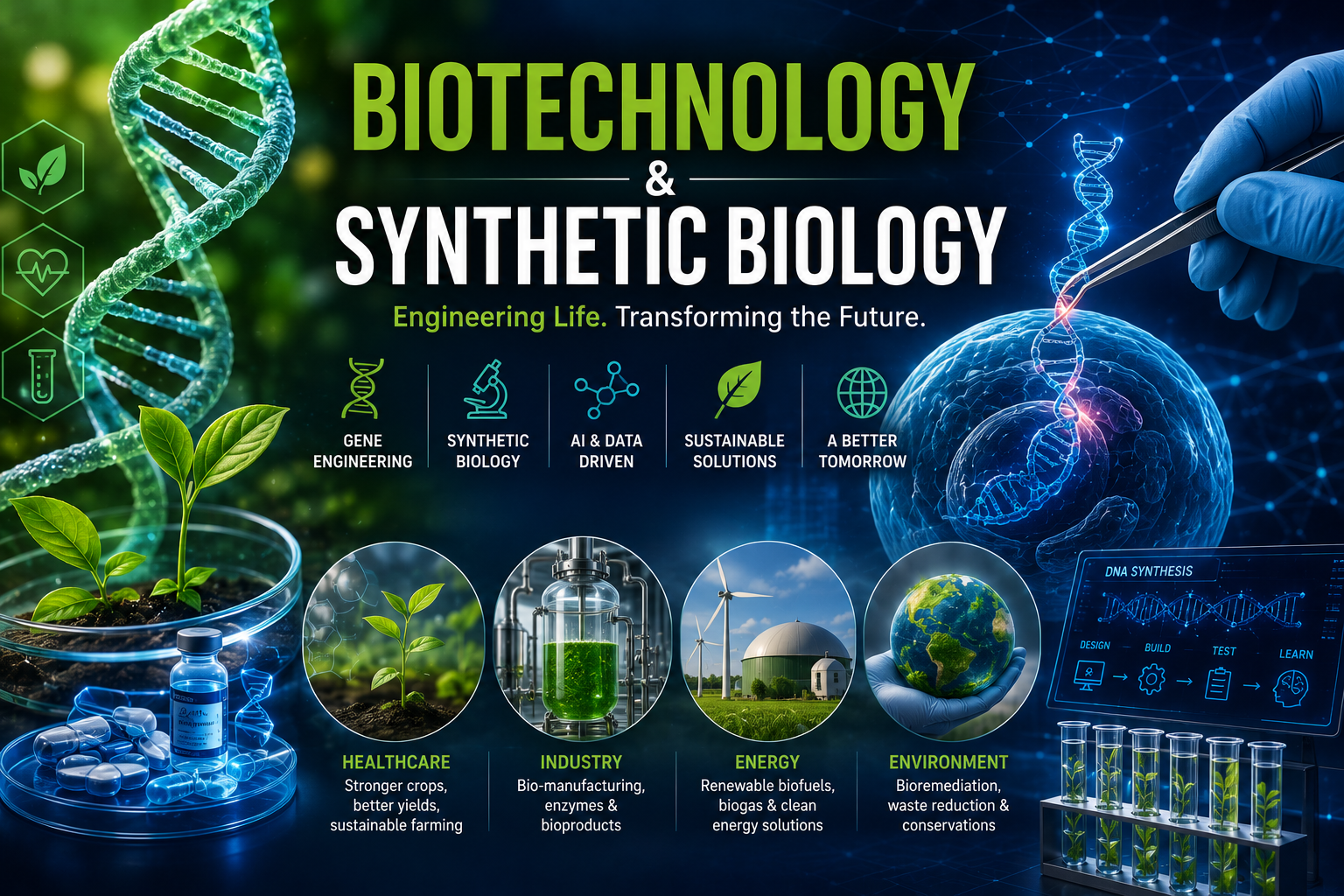
Biotechnology has been improving human life for thousands of years through agriculture, medicine, and food production. Today, with advances in genetics, artificial intelligence, and genome engineering, biotechnology has evolved into an even more powerful field known as Synthetic Biology.
These technologies are revolutionizing medicine, agriculture, environmental conservation, manufacturing, and renewable energy. Scientists can now not only modify living organisms but also design entirely new biological systems to solve some of humanity’s biggest challenges.
What is Biotechnology?
Biotechnology is the use of living organisms, cells, or biological systems to develop products and technologies that improve human life.
It combines:
- Biology
- Genetics
- Chemistry
- Computer Science
- Engineering
- Artificial Intelligence
Simple Definition
Biotechnology = Using Living Organisms and Biological Processes to Develop Useful Products
Examples include:
- Vaccines
- Antibiotics
- Insulin production
- Disease diagnosis
- Genetically modified crops
- Biofuels
What is Synthetic Biology?
Synthetic Biology is an advanced branch of biotechnology that involves designing, building, and programming biological systems using engineering principles.
Instead of only modifying existing organisms, scientists can create entirely new biological functions by editing DNA.
Simple Definition
Synthetic Biology = Engineering Biology to Create New Biological Systems
It combines:
- Genetic Engineering
- DNA Design
- CRISPR Gene Editing
- Artificial Intelligence
- Robotics
- Automation
- Bioinformatics
Biotechnology vs Synthetic Biology
| Feature | Biotechnology | Synthetic Biology |
|---|---|---|
| Goal | Use natural biological systems | Design and engineer new biological systems |
| DNA Modification | Limited | Extensive and programmable |
| Engineering Approach | Traditional biology | Engineering + Biology |
| Applications | Medicine, agriculture, food | Advanced medicine, bio-manufacturing, artificial cells |
| Complexity | Moderate | Highly advanced |
How Biotechnology Works
Biotechnology uses living cells and microorganisms to create useful products.
Step 1 – Collect Biological Material
Scientists obtain:
- Cells
- Microorganisms
- DNA
- Enzymes
↓
Step 2 – Laboratory Processing
Biological material is:
- Studied
- Modified
- Cultured
- Tested
↓
Step 3 – Product Development
Products are developed such as:
- Medicines
- Vaccines
- Crops
- Industrial enzymes
↓
Step 4 – Commercial Production
Large-scale manufacturing begins.
How Synthetic Biology Works
Synthetic biology follows an engineering cycle:
1. Design
Scientists design DNA sequences using specialized software.
↓
2. Build
The DNA is synthesized and inserted into cells.
↓
3. Test
Researchers observe how the modified organism behaves.
↓
4. Learn
Results are analyzed, and the design is improved.
This Design → Build → Test → Learn (DBTL) cycle accelerates innovation in biological engineering.
Simple Diagram
        DNA / Cells
             │
             ▼
   Biotechnology Laboratory
             │
             ▼
     Genetic Engineering
             │
             ▼
   Synthetic Biology Design
             │
             ▼
    AI + Bioinformatics
             │
             ▼
 Engineered Organisms
             │
      ┌──────┼──────┐
      ▼      ▼      ▼
 Medicine Agriculture Industry
Key Technologies
🧬 Genetic Engineering
Modifies genes to improve traits or treat diseases.
✂️ CRISPR Gene Editing
CRISPR allows scientists to edit DNA with remarkable precision.
Applications:
- Disease treatment
- Crop improvement
- Genetic research
🧪 DNA Synthesis
Scientists can create custom DNA sequences in laboratories.
💻 Bioinformatics
Uses computers and AI to analyze biological data.
🤖 Artificial Intelligence
AI helps researchers:
- Predict protein structures
- Analyze genomes
- Design new biological molecules
- Speed up drug discovery
🧫 Cell Engineering
Scientists modify cells to perform specific tasks, such as producing medicines or breaking down pollutants.
Applications of Biotechnology
🏥 Healthcare
Biotechnology supports:
- Vaccine development
- Antibiotic production
- Gene therapy
- Cancer treatment
- Personalized medicine
- Diagnostic testing
🌾 Agriculture
Applications include:
- Drought-resistant crops
- Pest-resistant plants
- Improved crop yields
- Disease-resistant livestock
🍞 Food Industry
Biotechnology is used to produce:
- Yogurt
- Cheese
- Bread
- Fermented foods
- Plant-based proteins
🌍 Environmental Protection
Biotechnology helps:
- Clean polluted water
- Remove oil spills
- Treat waste
- Reduce plastic pollution using biodegradable materials
⚡ Renewable Energy
Biotechnology enables production of:
- Bioethanol
- Biodiesel
- Biogas
- Sustainable fuels
Applications of Synthetic Biology
💊 Next-Generation Medicines
Scientists are developing:
- Personalized therapies
- Smart drugs
- Cell-based treatments
- Engineered immune cells
🧬 Artificial Cells
Researchers are creating synthetic cells for medical and industrial applications.
🏭 Bio-Manufacturing
Engineered microorganisms can produce:
- Medicines
- Chemicals
- Bioplastics
- Industrial enzymes
🌱 Sustainable Agriculture
Synthetic biology helps create crops with:
- Better nutrition
- Improved climate resilience
- Reduced fertilizer requirements
🌊 Environmental Restoration
Engineered microbes may help:
- Capture carbon dioxide
- Break down pollutants
- Clean contaminated ecosystems
Benefits
🌍 Environmental Benefits
- Reduced pollution
- Lower greenhouse gas emissions
- Sustainable manufacturing
- Eco-friendly materials
🏥 Medical Benefits
- Faster drug development
- Improved disease diagnosis
- Personalized medicine
- Better vaccines
🌾 Agricultural Benefits
- Higher crop yields
- Improved food security
- Reduced pesticide use
- Climate-resilient farming
💰 Economic Benefits
- New biotechnology industries
- Job creation
- Improved industrial productivity
- Lower manufacturing costs
Challenges
Despite its enormous potential, these technologies face important challenges:
- Ethical concerns about gene editing
- High research and development costs
- Biosafety and biosecurity risks
- Regulatory approvals
- Public acceptance
- Protection of genetic data
- Long-term environmental impact
Future of Biotechnology & Synthetic Biology
The future is expected to bring remarkable innovations, including:
- AI-designed medicines
- Personalized gene therapies
- Lab-grown organs for transplantation
- Climate-resistant crops
- Carbon-capturing microorganisms
- Sustainable biofuels
- Programmable living cells
- Engineered bacteria for pollution cleanup
- Synthetic food production
- Space biotechnology for long-duration missions
These technologies will play a key role in addressing global challenges such as disease, food security, climate change, and sustainable manufacturing.
Emerging Trends
- AI-powered drug discovery
- CRISPR-based therapies
- Precision medicine
- Digital biology
- Bioprinting of tissues and organs
- Lab-grown meat
- Synthetic vaccines
- Microbiome engineering
- Bio-based plastics
- Sustainable biomaterials
Why Biotechnology & Synthetic Biology Matter
As the global population grows and environmental pressures increase, biotechnology and synthetic biology offer innovative solutions for healthcare, agriculture, clean energy, and conservation.
By combining biology with engineering and artificial intelligence, scientists are creating technologies that can improve quality of life while promoting sustainability.
Conclusion
Biotechnology and Synthetic Biology are transforming the way we understand and engineer life. From producing life-saving medicines and improving crop yields to creating sustainable materials and renewable fuels, these technologies are reshaping industries and solving some of the world’s most pressing problems.
As advances in genetics, AI, and bioengineering continue, Biotechnology and Synthetic Biology will remain at the forefront of innovation, helping build a healthier, more sustainable future.
Frequently Asked Questions (FAQs)
What is Biotechnology?
Biotechnology is the use of living organisms, cells, or biological processes to develop products and technologies for healthcare, agriculture, industry, and environmental protection.
What is Synthetic Biology?
Synthetic Biology is an advanced field that applies engineering principles to design, build, and modify biological systems for specific purposes.
How are Biotechnology and Synthetic Biology different?
Biotechnology primarily uses existing biological systems, while Synthetic Biology designs and engineers new biological functions and organisms.
What are the applications of Biotechnology?
Applications include medicine, agriculture, food production, renewable energy, environmental cleanup, and industrial manufacturing.
What is the future of Synthetic Biology?
The future includes AI-designed medicines, programmable cells, lab-grown organs, sustainable bio-manufacturing, climate-resilient crops, and advanced gene therapies.