

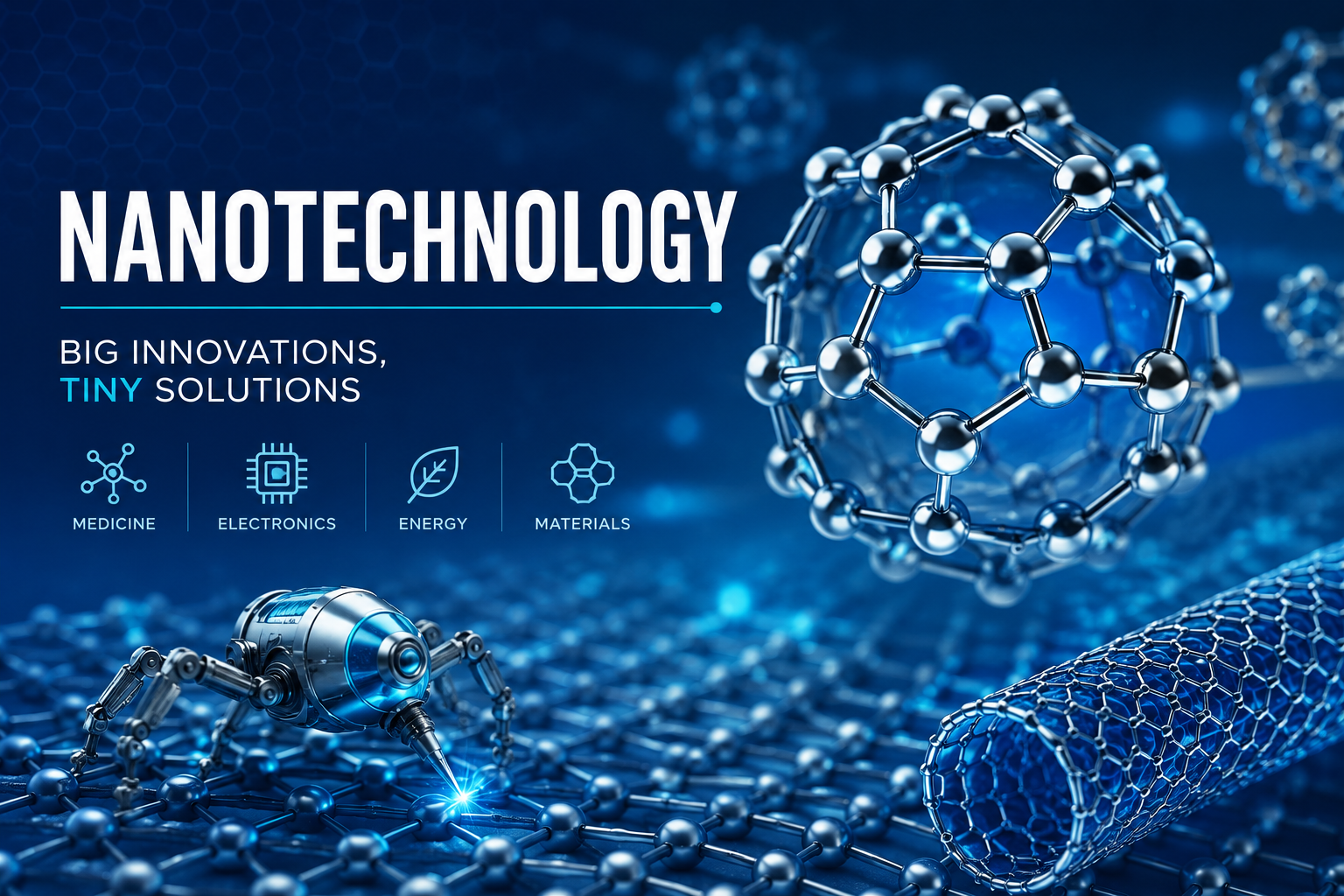

Nanotechnology is one of the most exciting fields of modern science and engineering. It is changing the way we create medicines, electronic devices, energy systems, and even everyday products. From cancer treatment to self-cleaning clothes and ultra-fast computer chips, nanotechnology is making innovations possible that were once considered science fiction.
In this article, we’ll explore what nanotechnology is, how it works, its real-world applications, advantages, challenges, and what the future holds.
What is Nanotechnology?
Nanotechnology is the science and engineering of manipulating matter at the nanoscale, typically between 1 and 100 nanometers (nm).
A nanometer is incredibly small:
- 1 nanometer = 0.000000001 meter (10⁻⁹ meters)
- A human hair is approximately 80,000–100,000 nanometers wide.
- DNA has a diameter of around 2.5 nanometers.
At this tiny scale, materials often exhibit completely different physical, chemical, electrical, and optical properties than they do in larger forms.
What Does “Nano” Mean?
The word nano comes from the Greek word meaning “dwarf”.
Working at the nanoscale allows scientists to control atoms and molecules individually, enabling the creation of materials with extraordinary capabilities.
Table of Contents
How Does Nanotechnology Work?
Nanotechnology involves manipulating atoms and molecules to build new materials or improve existing ones.
Scientists use specialized equipment such as:
- Scanning Electron Microscope (SEM)
- Transmission Electron Microscope (TEM)
- Atomic Force Microscope (AFM)
- Scanning Tunneling Microscope (STM)
These tools allow researchers to observe and manipulate structures at the atomic level.
Types of Nanotechnology
1. Carbon-Based Nanotechnology
Uses carbon nanotubes, graphene, and fullerenes.
Applications include:
- Flexible electronics
- High-strength materials
- Energy storage
- Conductive coatings
2. Nano Materials
Materials engineered at the nanoscale.
Examples:
- Nanoparticles
- Nanowires
- Quantum dots
- Nanofibers
3. Molecular Nanotechnology
Focuses on assembling molecules to build complex structures atom by atom.
Potential applications include:
- Medical nanorobots
- Molecular manufacturing
- Advanced materials
4. Nano Electronics
Develops extremely small and efficient electronic components.
Examples include:
- Faster processors
- Smaller transistors
- Flexible displays
- Memory devices
Applications of Nanotechnology
1. Healthcare and Medicine
Nanotechnology is revolutionizing medicine.
Applications include:
- Targeted drug delivery
- Cancer treatment
- Tissue engineering
- Artificial organs
- Medical imaging
- DNA analysis
- Smart implants
Example
Cancer medicines can be delivered directly to tumor cells using nanoparticles, reducing damage to healthy tissues.
2. Electronics
Nanotechnology enables:
- Faster CPUs
- Smaller transistors
- Better smartphones
- Flexible displays
- Quantum computing components
- Efficient memory chips
3. Energy
Nanotechnology improves energy efficiency through:
- High-capacity batteries
- Efficient solar panels
- Hydrogen fuel cells
- Energy storage systems
- Supercapacitors
4. Environment
Applications include:
- Water purification
- Air pollution control
- Oil spill cleanup
- Wastewater treatment
- Environmental sensors
5. Agriculture
Farmers benefit from nanotechnology through:
- Smart fertilizers
- Nano pesticides
- Soil sensors
- Crop monitoring
- Water conservation
6. Food Industry
Uses include:
- Smart food packaging
- Longer shelf life
- Freshness indicators
- Food safety sensors
- Improved food preservation
7. Textile Industry
Nanotechnology produces fabrics that are:
- Water resistant
- Wrinkle free
- Stain resistant
- Antibacterial
- UV resistant
8. Construction
Nanomaterials improve:
- Concrete strength
- Fire resistance
- Insulation
- Self-cleaning glass
- Durable coatings
9. Automotive Industry
Applications include:
- Scratch-resistant paint
- Lightweight materials
- Better batteries
- Fuel efficiency
- Advanced sensors
10. Aerospace
Nanotechnology helps produce:
- Lightweight aircraft
- Stronger composites
- Heat-resistant materials
- Efficient fuel systems
Advantages of Nanotechnology
Improved Medical Treatments
Targeted therapies reduce side effects and improve patient outcomes.
Stronger Materials
Nanomaterials are lighter yet stronger than traditional materials.
Better Electronics
Devices become smaller, faster, and more energy-efficient.
Cleaner Environment
Nanotechnology helps remove pollutants and purify water.
Energy Efficiency
Improves renewable energy technologies and battery performance.
Longer Product Life
Nano coatings increase durability and resistance to wear.
Challenges of Nanotechnology
Despite its enormous potential, nanotechnology also presents challenges.
Health Risks
Some nanoparticles may affect human health if inhaled or ingested.
Environmental Impact
Long-term environmental effects are still being studied.
High Cost
Research and manufacturing require sophisticated equipment and significant investment.
Ethical Concerns
Advanced technologies raise questions about privacy, regulation, and responsible use.
Regulations
Governments continue developing standards for safe production and use.
Real-Life Examples of Nanotechnology
Sunscreen
Nano-sized zinc oxide and titanium dioxide protect against UV rays while remaining transparent on the skin.
Smartphones
Modern processors contain billions of tiny transistors built using nanometer-scale manufacturing.
Sports Equipment
Tennis rackets, bicycles, and helmets use carbon nanotubes for greater strength and lower weight.
Water Filters
Nano membranes remove bacteria, viruses, and harmful contaminants.
Clothing
Nano coatings make fabrics waterproof and stain resistant.
Future of Nanotechnology
The future of nanotechnology is incredibly promising.
Emerging developments include:
- Medical nanorobots
- Smart drug delivery systems
- Quantum computers
- Self-healing materials
- Artificial organs
- Advanced batteries
- Nano satellites
- Personalized medicine
- Flexible electronics
- Intelligent sensors
As research progresses, nanotechnology is expected to play a central role in healthcare, manufacturing, transportation, and sustainable energy.
Is Nanotechnology Safe?
Most nanotechnology products are considered safe when designed and used according to established safety standards. However, because nanoparticles behave differently from larger materials, researchers continue to study their long-term effects on human health and the environment.
Responsible regulation, testing, and monitoring are essential to ensure safe and sustainable development.
Frequently Asked Questions (FAQs)
What is nanotechnology in simple words?
Nanotechnology is the science of working with extremely tiny particles—between 1 and 100 nanometers—to create materials and devices with unique properties.
Why is nanotechnology important?
It enables innovations in medicine, electronics, energy, environmental protection, manufacturing, and many other industries.
Where is nanotechnology used?
It is used in:
- Healthcare
- Smartphones
- Computers
- Solar panels
- Food packaging
- Clothing
- Cosmetics
- Water purification
- Agriculture
- Aerospace
What is one nanometer?
One nanometer is one billionth of a meter (10⁻⁹ m).
Can nanotechnology cure diseases?
Nanotechnology is already improving treatments for diseases such as cancer by enabling targeted drug delivery. Research continues into many other medical applications.
Conclusion
Nanotechnology is reshaping the modern world by allowing scientists and engineers to manipulate matter at the atomic and molecular level. Its applications span medicine, electronics, energy, agriculture, construction, and environmental protection.
Although challenges such as safety, cost, and regulation remain, continued research is unlocking new possibilities that could significantly improve quality of life and drive technological progress for decades to come.
Whether you’re a student, researcher, or technology enthusiast, understanding nanotechnology today provides a glimpse into the innovations that will define tomorrow.
Recommended External References
- National Nanotechnology Initiative (NNI): https://www.nano.gov/
- Nature Nanotechnology: https://www.nature.com/nnano/
- IEEE Nanotechnology Council: https://ieeenano.org/