

Next-Generation Lipid Nanoparticles (LNPs): Complete Guide to Advanced Drug Delivery in 2026

Modern medicine is undergoing a revolution, and one of the technologies driving this transformation is Next-Generation Lipid Nanoparticles (LNPs). These microscopic lipid-based carriers have become essential for delivering fragile therapeutic molecules such as mRNA, siRNA, DNA, CRISPR gene-editing components, proteins, and peptides safely into human cells.
LNPs gained worldwide attention during the COVID-19 pandemic because they enabled the successful delivery of mRNA vaccines. However, today’s next-generation LNPs go far beyond vaccines. Researchers are designing smarter, safer, and more targeted nanoparticles capable of treating cancer, genetic disorders, infectious diseases, and neurological conditions.
In this guide, we’ll explore how next-generation lipid nanoparticles work, why they matter, and what the future holds for this groundbreaking technology.
Table of Contents
What Are Next-Generation Lipid Nanoparticles (LNPs):?
Lipid Nanoparticles (LNPs) are tiny spherical particles, generally ranging from 50 to 150 nanometers, composed of specially engineered lipids that encapsulate therapeutic molecules.
Their primary functions are:
- Protect fragile genetic material
- Deliver medicine into target cells
- Prevent degradation in the bloodstream
- Improve treatment effectiveness
- Reduce unwanted side effects
Unlike traditional drug delivery systems, LNPs provide a highly efficient way to transport biological molecules that would otherwise be destroyed before reaching their target.
Why Are Next-Generation LNPs Needed?
Although first-generation LNPs achieved remarkable success, they still face limitations such as:
- Limited tissue targeting
- Immune system activation
- Liver accumulation
- Reduced efficiency for certain therapies
- Storage and stability challenges
Next-generation LNPs are engineered to overcome these problems by incorporating advanced materials, targeting ligands, biodegradable lipids, and intelligent release mechanisms.
Components of Next-Generation Lipid Nanoparticles
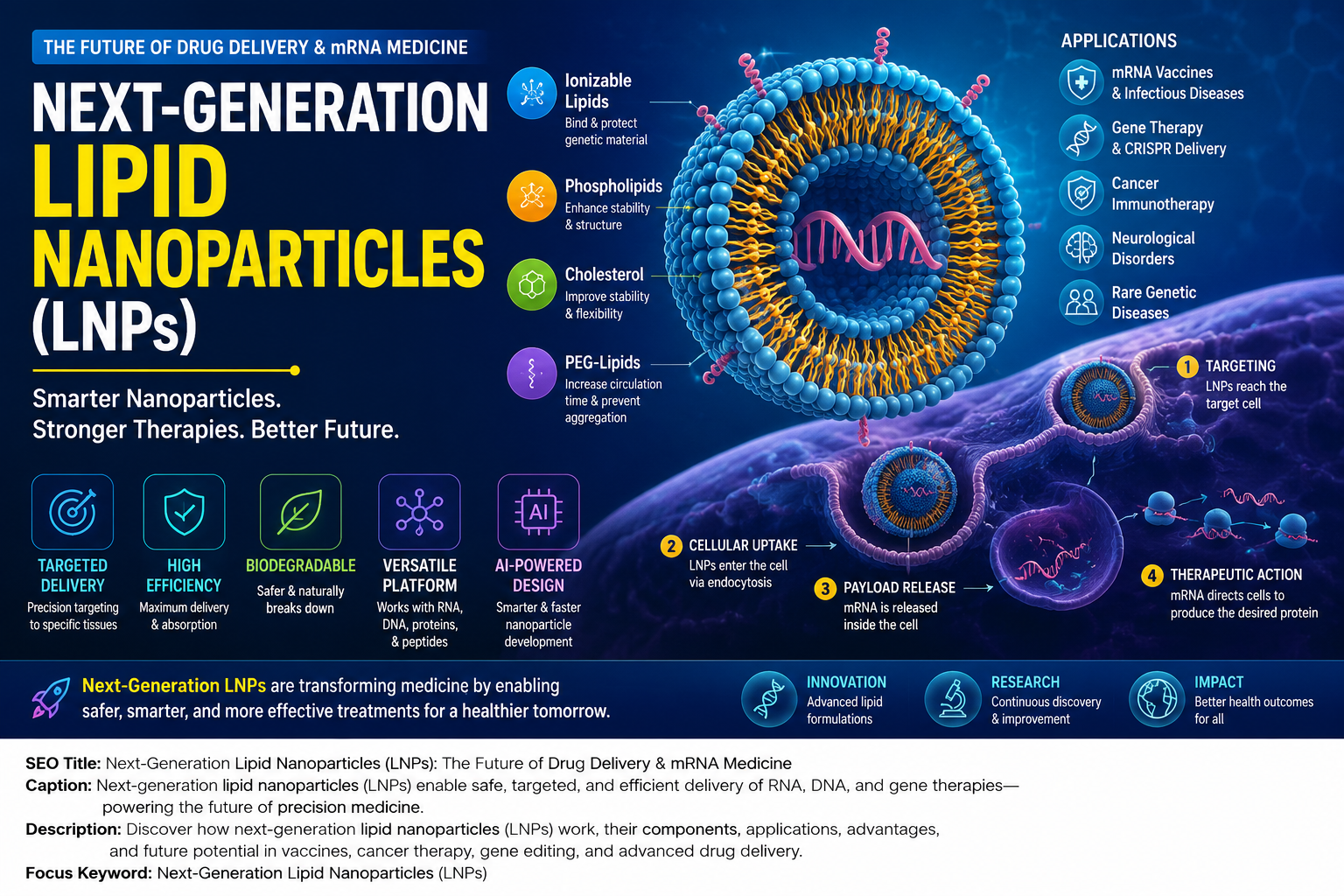
A typical LNP consists of four major lipid components.
1. Ionizable Lipids
These are the most important component.
Functions:
- Bind nucleic acids
- Become positively charged in acidic environments
- Release therapeutic payload inside cells
- Reduce toxicity compared to permanently charged lipids
2. Phospholipids
They help maintain structural integrity.
Benefits include:
- Improved membrane fusion
- Enhanced stability
- Better cellular uptake
3. Cholesterol
Cholesterol strengthens the nanoparticle.
Advantages:
- Increased stability
- Improved circulation time
- Better particle flexibility
4. PEG-Lipids
Polyethylene Glycol (PEG) lipids:
- Prevent particle aggregation
- Increase circulation time
- Improve stability during storage
Researchers are also developing PEG alternatives to reduce immune-related reactions.
How Do Next-Generation LNPs Work?
The delivery process involves several carefully engineered steps.
Step 1: Encapsulation
The therapeutic molecule (such as mRNA or siRNA) is enclosed inside the lipid nanoparticle.
Step 2: Injection
The LNP enters the bloodstream through intravenous or intramuscular injection.
Step 3: Targeting
Advanced surface modifications guide nanoparticles toward specific organs or diseased tissues.
Step 4: Cellular Uptake
Cells absorb the nanoparticle through endocytosis.
Step 5: Payload Release
The acidic environment inside the endosome activates ionizable lipids, enabling the release of the therapeutic cargo into the cell.
Step 6: Therapeutic Action
The delivered molecule performs its intended function, such as producing a therapeutic protein, silencing a disease-causing gene, or editing DNA.
Key Innovations in Next-Generation LNPs
1. Organ-Specific Targeting
Scientists are designing nanoparticles that selectively deliver therapies to:
- Liver
- Lungs
- Brain
- Heart
- Tumors
- Muscle tissue
This significantly improves treatment precision.
2. Biodegradable Lipids
New lipid formulations naturally degrade after delivering their payload, reducing long-term toxicity.
Benefits include:
- Improved safety
- Lower inflammation
- Better repeat dosing
3. Smart Responsive LNPs
Researchers are developing nanoparticles that release medicine only when triggered by:
- pH changes
- Temperature
- Enzymes
- Ultrasound
- Light
- Magnetic fields
This minimizes damage to healthy tissues.
4. Personalized Medicine
Future LNPs may be customized for individual patients based on:
- Genetic profile
- Tumor mutations
- Disease biomarkers
- Immune response
5. AI-Assisted LNP Design
Artificial intelligence is accelerating LNP development by:
- Predicting optimal lipid combinations
- Improving stability
- Reducing experimental costs
- Identifying high-performing formulations
Applications of Next-Generation LNPs
1. mRNA Vaccines
LNPs protect fragile mRNA molecules and deliver them efficiently into human cells.
Applications include:
- COVID-19 vaccines
- Influenza vaccines
- RSV vaccines
- HIV vaccine research
- Universal coronavirus vaccines
2. Cancer Immunotherapy
LNPs can deliver:
- Tumor-targeting mRNA
- Cancer vaccines
- Gene-editing tools
- Immune modulators
These therapies stimulate the immune system to recognize and destroy cancer cells.
3. Gene Therapy
LNPs safely transport:
- CRISPR-Cas9 components
- DNA
- mRNA
- siRNA
Potential treatments include:
- Muscular dystrophy
- Cystic fibrosis
- Hemophilia
- Rare inherited diseases
4. Neurological Disorders
Researchers are developing LNPs capable of crossing the blood-brain barrier.
Potential targets include:
- Alzheimer’s disease
- Parkinson’s disease
- Huntington’s disease
- Brain tumors
5. Rare Genetic Diseases
LNP-based therapies are showing promise in correcting defective genes responsible for inherited disorders.
6. Infectious Diseases
Beyond COVID-19, LNPs are being investigated for vaccines and therapeutics against:
- Malaria
- Tuberculosis
- HIV
- Zika virus
- Dengue fever
Advantages of Next-Generation LNPs
| Advantage | Benefit |
|---|---|
| High Delivery Efficiency | More medicine reaches target cells |
| Low Toxicity | Safer than older carriers |
| Biodegradable | Naturally breaks down after delivery |
| Targeted Delivery | Reduces side effects |
| Protects RNA | Prevents degradation |
| Scalable Manufacturing | Suitable for large-scale production |
| Versatile Platform | Supports mRNA, siRNA, DNA, proteins, and CRISPR |
Challenges
Despite rapid progress, several challenges remain.
Tissue-Specific Delivery
Achieving precise delivery beyond the liver remains an active area of research.
Immune Response
Some formulations may trigger unwanted immune activation.
Manufacturing Complexity
Large-scale production requires strict quality control.
Storage Requirements
Some LNP-based products still require cold-chain storage, although newer formulations aim to improve stability.
Future Trends (2026–2035)
The coming decade is expected to bring significant advances, including:
- AI-designed lipid formulations
- Brain-targeted nanoparticles
- Oral and inhalable LNP therapies
- Personalized cancer vaccines
- CRISPR delivery without viral vectors
- Self-amplifying RNA vaccines
- Multi-drug delivery platforms
- Precision nanomedicine
Frequently Asked Questions (FAQs)
What are next-generation lipid nanoparticles?
They are advanced lipid-based delivery systems engineered to transport therapeutic molecules such as mRNA, siRNA, DNA, and gene-editing tools more safely and efficiently than earlier nanoparticle formulations.
Why are LNPs important?
LNPs protect delicate biological molecules from degradation and enable them to enter cells, making modern RNA therapeutics and vaccines possible.
What diseases can LNPs help treat?
Researchers are investigating their use for infectious diseases, cancer, inherited genetic disorders, neurological conditions, and cardiovascular diseases.
Are LNPs biodegradable?
Many next-generation LNPs are designed with biodegradable lipids that break down after delivering their therapeutic cargo, reducing the risk of long-term accumulation.
Can LNPs replace viral vectors?
In some applications, LNPs offer a promising non-viral alternative for delivering gene-editing and nucleic acid therapies, potentially improving safety and manufacturing flexibility.
Conclusion
Next-generation lipid nanoparticles represent one of the most significant advances in modern drug delivery. By enabling the safe transport of RNA, DNA, proteins, and gene-editing tools, they are transforming vaccines, cancer therapies, and precision medicine. As innovations in targeted delivery, biodegradable materials, and AI-driven formulation continue, LNPs are poised to become a foundational technology for the next generation of therapeutics.
Recommended External Resources
For readers who want to explore the science and latest developments in LNP technology, the following authoritative resources are valuable:
- Nature Reviews Drug Discovery – Reviews on lipid nanoparticles and RNA therapeutics
https://www.nature.com/nrd/ - National Institutes of Health (NIH) – Research on nanomedicine, gene therapy, and mRNA technologies
https://www.nih.gov/ - U.S. Food and Drug Administration (FDA) – Information on approved RNA-based medicines and regulatory guidance
https://www.fda.gov/ - World Health Organization (WHO) – Vaccine development and global health updates
https://www.who.int/ - National Cancer Institute (NCI) – Nanotechnology in cancer diagnosis and treatment
https://www.cancer.gov/