

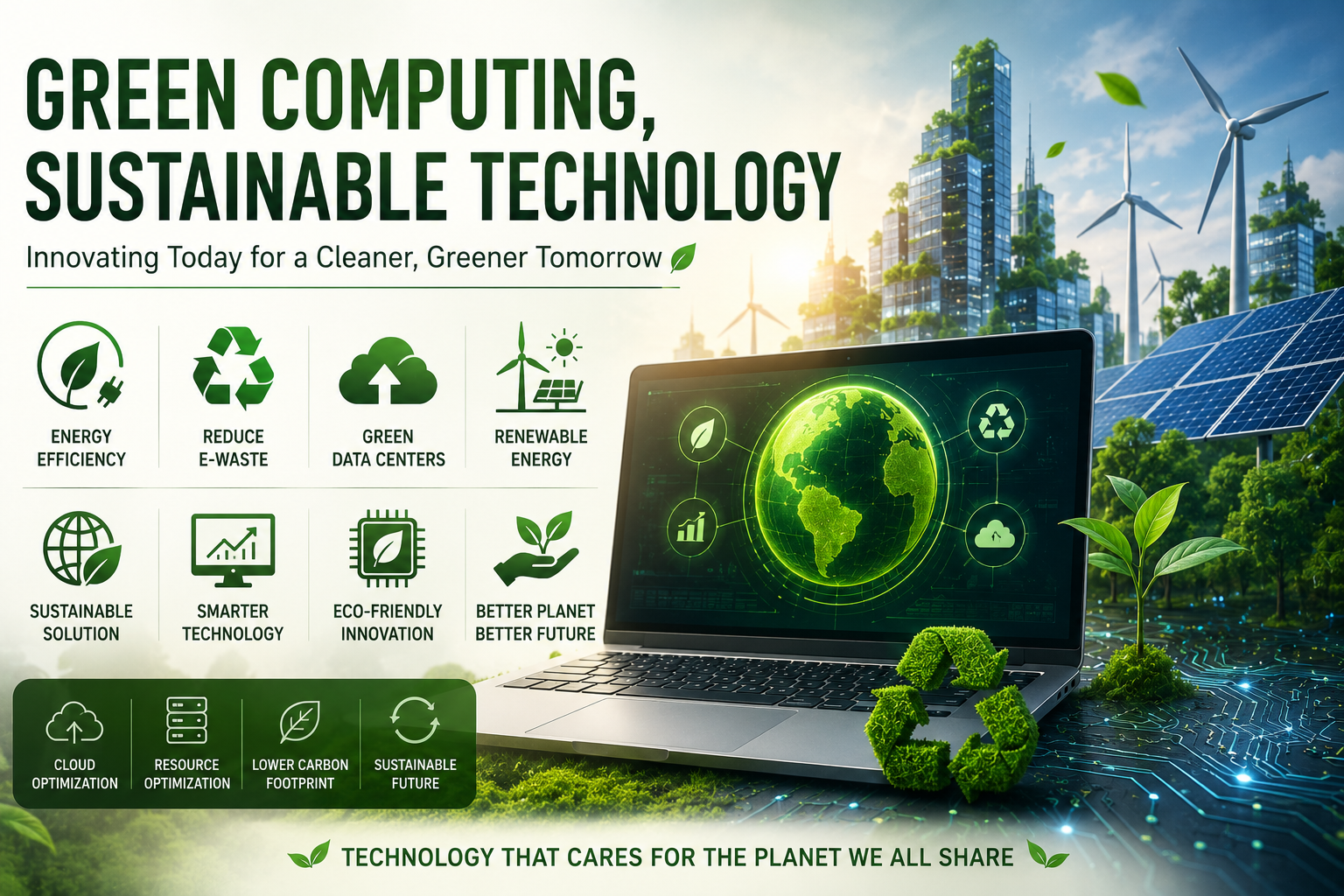

Green Computing & Sustainable Technology: Technology That Protects the Planet
As technology continues to grow, so does its environmental impact. Data centers consume vast amounts of electricity, electronic waste (e-waste) is increasing rapidly, and billions of connected devices require energy to operate. These challenges have led to the rise of Green Computing and Sustainable Technology.
Green Computing focuses on designing, using, and disposing of computers and IT systems in environmentally responsible ways. Sustainable Technology goes a step further by creating technologies that meet today’s needs without compromising the ability of future generations to meet theirs.
Together, these approaches help reduce energy consumption, lower carbon emissions, minimize electronic waste, and promote efficient use of natural resources.
Table of Contents
What is Green Computing?
Green Computing, also called Green IT, is the practice of designing, manufacturing, operating, and disposing of computers and related systems in ways that minimize environmental impact.
The goal is to:
- Reduce electricity consumption
- Lower greenhouse gas emissions
- Extend the lifespan of devices
- Recycle electronic waste
- Improve energy efficiency
Simple Definition
Green Computing = Environmentally Friendly Use of Information Technology
What is Sustainable Technology?
Sustainable Technology refers to technologies designed to reduce environmental impact while supporting long-term economic and social development.
It includes:
- Renewable energy technologies
- Energy-efficient hardware
- Smart buildings
- Electric vehicles
- Circular economy solutions
- Eco-friendly manufacturing
- AI for environmental monitoring
Green Computing vs Sustainable Technology
| Feature | Green Computing | Sustainable Technology |
|---|---|---|
| Focus | IT systems and computing | All types of technology |
| Goal | Reduce environmental impact of computing | Create environmentally sustainable solutions |
| Scope | Computers, servers, networks | Energy, transport, agriculture, industry, cities |
| Examples | Energy-efficient data centers, recycling PCs | Solar power, smart grids, electric vehicles |
Principles of Green Computing
1. Energy Efficiency
Use devices that consume less electricity.
Examples:
- LED monitors
- Energy Star-certified devices
- Low-power processors
- Efficient power supplies
2. Resource Optimization
Use computing resources efficiently by:
- Virtualization
- Cloud computing
- Server consolidation
- Efficient software design
3. E-Waste Reduction
Electronic waste can be minimized by:
- Recycling devices
- Refurbishing computers
- Repairing instead of replacing
- Responsible disposal
4. Sustainable Manufacturing
Manufacturers reduce environmental impact by:
- Using recyclable materials
- Reducing harmful chemicals
- Lowering water consumption
- Using renewable energy in production
5. Renewable Energy
Power IT infrastructure using:
- Solar energy
- Wind energy
- Hydroelectric power
- Geothermal energy
Key Technologies Supporting Green Computing
Cloud Computing
Cloud providers optimize server utilization, reducing the need for many underused physical servers.
Artificial Intelligence (AI)
AI helps optimize:
- Power consumption
- Cooling systems
- Energy management
- Resource allocation
Internet of Things (IoT)
IoT sensors monitor:
- Electricity usage
- Water consumption
- Building efficiency
- Air quality
Virtualization
Multiple virtual machines run on one physical server, reducing hardware requirements and energy use.
Smart Energy Management
Software automatically adjusts energy consumption based on demand.
Applications of Green Computing
Modern data centers use:
- Efficient cooling systems
- Renewable energy
- AI-powered energy management
- Liquid cooling technologies
Manufacturing
Factories reduce energy use by:
- Smart automation
- Predictive maintenance
- Energy monitoring
- Efficient production planning
Smart Buildings
Buildings use intelligent systems to control:
- Lighting
- Air conditioning
- Heating
- Security
- Water usage
Transportation
Sustainable technologies support:
- Electric vehicles (EVs)
- Smart traffic management
- Public transportation optimization
- EV charging infrastructure
Agriculture
Farmers use sustainable technologies for:
- Precision irrigation
- Soil monitoring
- Weather forecasting
- Smart farming
Healthcare
Hospitals improve sustainability through:
- Digital health records
- Energy-efficient medical equipment
- Telemedicine
- Smart facility management
Benefits of Green Computing & Sustainable Technology
Environmental Benefits
- Reduced carbon emissions
- Lower energy consumption
- Less electronic waste
- Conservation of natural resources
- Improved air quality
Economic Benefits
- Lower electricity costs
- Reduced maintenance expenses
- Longer equipment lifespan
- Better resource utilization
Social Benefits
- Healthier environments
- Improved quality of life
- Support for sustainable development
- Increased awareness of environmental responsibility
Challenges
Despite its advantages, Green Computing faces several challenges:
- High initial investment
- Limited recycling infrastructure
- Rapid technological obsolescence
- Lack of awareness
- Complex supply chains
- Data center cooling requirements
- Balancing performance with energy efficiency
Best Practices for Green Computing
- Turn off devices when not in use
- Use energy-efficient hardware
- Enable power-saving modes
- Upgrade instead of replacing devices
- Recycle old electronics responsibly
- Reduce paper usage through digital workflows
- Adopt cloud and virtualization technologies
- Purchase products with environmental certifications
- Use renewable energy whenever possible
Future of Green Computing
The future of Green Computing is closely tied to advances in AI, renewable energy, and sustainable engineering. Key trends include:
- Carbon-neutral data centers
- AI-driven energy optimization
- Low-power AI chips
- Green cloud computing
- Circular economy in electronics
- Sustainable semiconductor manufacturing
- Eco-friendly batteries
- Quantum computing with improved energy efficiency
- Smart cities powered by renewable energy
- Biodegradable electronic components
Governments and businesses worldwide are increasingly adopting environmental standards and sustainability goals, making Green Computing a central part of digital transformation.
Why Green Computing Matters
The digital economy continues to expand rapidly, and with it comes greater demand for energy and computing resources. Green Computing helps organizations reduce their environmental footprint while maintaining performance and innovation.
By embracing sustainable technologies, businesses can lower operating costs, meet environmental regulations, and contribute to a cleaner, healthier planet.
Conclusion
Green Computing and Sustainable Technology are essential for creating a future where technological progress goes hand in hand with environmental responsibility. From energy-efficient hardware and AI-optimized data centers to renewable energy and responsible recycling, these practices help reduce the environmental impact of modern computing.
As governments, businesses, and individuals continue to prioritize sustainability, Green Computing will play a vital role in building smarter cities, greener industries, and a more sustainable digital world.
Frequently Asked Questions (FAQs)
What is Green Computing?
Green Computing is the practice of designing, using, and disposing of computers and IT systems in ways that reduce environmental impact and improve energy efficiency.
What is Sustainable Technology?
Sustainable Technology includes technologies that minimize environmental impact while supporting long-term economic, social, and environmental sustainability.
Why is Green Computing important?
It helps reduce energy consumption, lower carbon emissions, decrease electronic waste, conserve natural resources, and lower operational costs.
What are examples of Green Computing?
Examples include energy-efficient computers, cloud computing, virtualization, renewable energy-powered data centers, recycling electronic devices, and AI-based energy management.
What is the future of Green Computing?
The future includes carbon-neutral data centers, AI-driven energy optimization, renewable-powered infrastructure, sustainable electronics manufacturing, and eco-friendly computing technologies.